
Concrete Curing: The Key to Lasting Strength in MD
Concrete Curing: The Unsung Hero of Durable Foundations in Southern MD
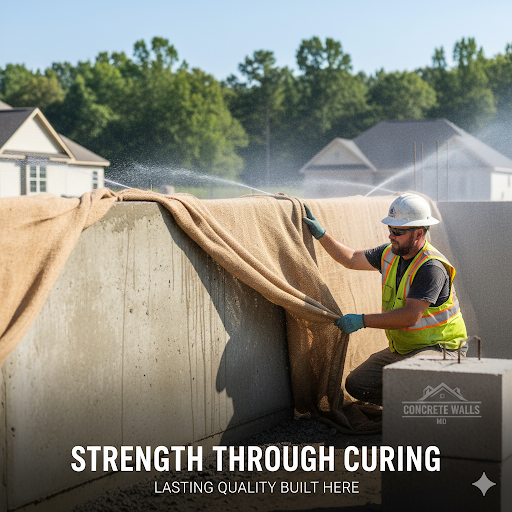
When you think about the strength of concrete, you might picture the solid, unyielding material itself. But did you know that the true durability and longevity of your concrete structure, especially here in Southern MD, depend heavily on a crucial process called "curing"? Proper concrete curing isn't just a recommendation; it's a chemical necessity that builds lasting quality from the inside out.
In this article, you will learn:
- What concrete curing is and why it's essential.
- The chemical process behind concrete strength.
- Why curing is particularly important for projects in Calvert County, St. Mary's County, Prince George's County, and Anne Arundel County.
- The benefits of properly cured concrete for your home or business.
What is Concrete Curing and Why Does It Matter?
Curing refers to maintaining an adequate moisture content and a favorable temperature in concrete for a period immediately following placement, finishing, and compaction. It's not just about letting the concrete dry; it's about controlling its drying process to allow the hydration chemical reactions to complete effectively.
For residents and businesses in Calvert County, St. Mary's County, Prince George's County, and Anne Arundel County, where weather conditions can vary, understanding and implementing proper curing techniques are paramount for any concrete project, from foundations to driveways.
The Chemical Process: How Curing Builds Strength
Concrete is a mixture of cement, aggregates (sand and gravel), and water. When water is added to cement, a chemical reaction called hydration begins. This reaction forms new compounds that bind the aggregates together, creating the solid material we know as concrete.
Here's where curing becomes critical:
- Hydration Needs Water: The hydration process requires a continuous supply of water. If the concrete dries out too quickly, hydration stops prematurely, leaving unreacted cement particles and a weaker, more porous structure.
- Temperature Control: Extreme temperatures can also adversely affect hydration. Curing helps to moderate the temperature of the concrete, ensuring the chemical reactions occur at an optimal rate.
- Microstructure Development: Proper curing allows the concrete to develop a dense, strong, and impermeable microstructure. This microscopic network is what gives concrete its remarkable compressive strength and resistance to cracking, shrinkage, and environmental stressors like freeze-thaw cycles common in Maryland.
Without adequate curing, concrete can lose up to 50% of its potential strength. This means a poorly cured foundation, sidewalk, or retaining wall could be significantly weaker and more prone to damage over time, leading to costly repairs down the road.
Why It's Crucial for Southern MD Properties
The varied climate of Southern Maryland, including the humidity near the Chesapeake Bay and the potential for freezing temperatures in winter, makes proper concrete curing even more important.
- Preventing Rapid Drying: Hot, dry, or windy conditions can cause surface moisture to evaporate too quickly, hindering hydration.
- Resisting Freeze-Thaw: Well-cured concrete has a denser pore structure, making it more resistant to water penetration and the damage caused by freezing and thawing cycles.
- Durability Against Elements: From heavy rains to fluctuating temperatures, properly cured concrete offers superior resistance to weathering and extends the lifespan of your investment.
The Concrete Walls Inc. Difference
At Concrete Walls Inc., based in Huntingtown, MD, we understand that true quality goes beyond just mixing and pouring. Our team meticulously adheres to industry best practices for concrete curing, ensuring that every foundation, retaining wall, and concrete structure we build in Calvert County, St. Mary's County, Prince George's County, and Anne Arundel County achieves its maximum potential strength and durability. We know that proper curing is the bedrock of a long-lasting, reliable concrete product.
Frequently Asked Questions: Concrete Curing & Strength
What exactly is "curing" and why is it so important?
Curing is the process of maintaining satisfactory moisture content and temperature in concrete for a period of time immediately following placement. It isn't just about "drying"; it’s a chemical reaction called hydration. Proper curing is the single most important factor in ensuring your concrete reaches its maximum potential for strength, durability, and wear resistance.
How does Maryland’s climate affect the curing process?
Maryland’s high humidity in the summer and freezing temperatures in the winter present unique challenges. High heat and wind can cause moisture to evaporate too quickly, leading to "plastic shrinkage cracks." Conversely, freezing temperatures can stop the hydration process entirely. We adjust our curing methods based on the local Maryland forecast to ensure the concrete is protected from these extremes.
How long does it take for concrete to fully cure?
While concrete hardens quickly, the curing process continues for a long time.
24 to 48 hours: Forms can usually be removed, and it is safe to walk on.
7 days: The concrete typically reaches about 70% of its specified compressive strength.
28 days: This is the industry standard for concrete to reach its full design strength.
What happens if concrete isn't cured properly?
Without proper curing, the surface of the concrete is significantly weakened. This can lead to a variety of issues, including:
Crazing: Fine network cracks on the surface.
Dusting: A powdery residue that forms because the surface is too soft.
Scaling: The surface "peeling" or flaking off, especially after a winter season.
Reduced Strength: The overall structural integrity may be up to 50% lower than properly cured concrete.
Do I need to water my new concrete?
In many cases, yes. This is known as "moist curing." Spraying the concrete with a fine mist of water several times a day for the first week helps keep the hydration process active. However, for certain projects, we may apply a curing compound (a liquid film) that seals the moisture in, eliminating the need for manual watering.
When can I drive my car on a new concrete driveway?
We generally recommend waiting at least 7 to 10 days before driving standard passenger vehicles on a new pour. For heavy trucks or equipment, it is best to wait the full 28 days to ensure the slab can handle the load without cracking.
Does Concrete Walls Inc. use chemical curing agents?
Yes, when appropriate. We use high-quality curing compounds that create a membrane over the concrete. This is especially helpful on large Maryland jobsites where consistent manual watering isn't feasible, ensuring the moisture stays locked inside the slab during those critical first few days.
Will curing prevent all cracks?
Concrete is naturally prone to slight shrinkage as it hardens. While curing doesn't guarantee zero cracks, it significantly reduces the risk of structural cracks. We combine proper curing with strategically placed control joints to ensure that any minor movement happens where it's supposed to, keeping the rest of your surface pristine.
Is there a difference between curing and sealing?
Yes. Curing happens immediately after the pour to help the concrete gain strength. Sealing is a separate step typically done after the concrete is fully cured (usually 28 days later) to protect the surface from stains, salts, and water penetration.
Conclusion
In summary, concrete curing is not merely a step in the construction process; it's a vital chemical endeavor that directly dictates the strength, durability, and longevity of any concrete structure. By ensuring proper moisture and temperature control during this critical period, we allow the concrete to fully develop its inherent strength, making it resilient against the elements and the test of time. For properties in Southern MD, this attention to detail means a foundation built to last.
Contact Concrete Walls Inc. for any of your concrete and foundation needs.
Terms Related To This Article :
- concrete curing
- concrete strength
- foundation durability
- Southern MD concrete
- Calvert County concrete
- St. Mary's County concrete
- Prince George's County concrete
- Anne Arundel County concrete
- concrete hydration
- concrete quality
- concrete construction
- Huntingtown MD concrete
#ConcreteCuring, #ConcreteStrength, #MDConcrete, #FoundationRepairMD, #DurableConcrete, #ConcreteWallsMD