
Concrete Foundation Maryland: Your Guide
Building a Strong Future: Your Guide to Concrete Foundations in Maryland
In this article, you will learn:
- The critical role of a concrete foundation in construction.
- Different types of concrete foundations.
- Factors influencing foundation choice in Southern Maryland.
- Why professional installation is crucial.
- How Concrete Walls Inc. provides expert foundation services in Calvert, St. Mary's, Prince George's, and Anne Arundel Counties.
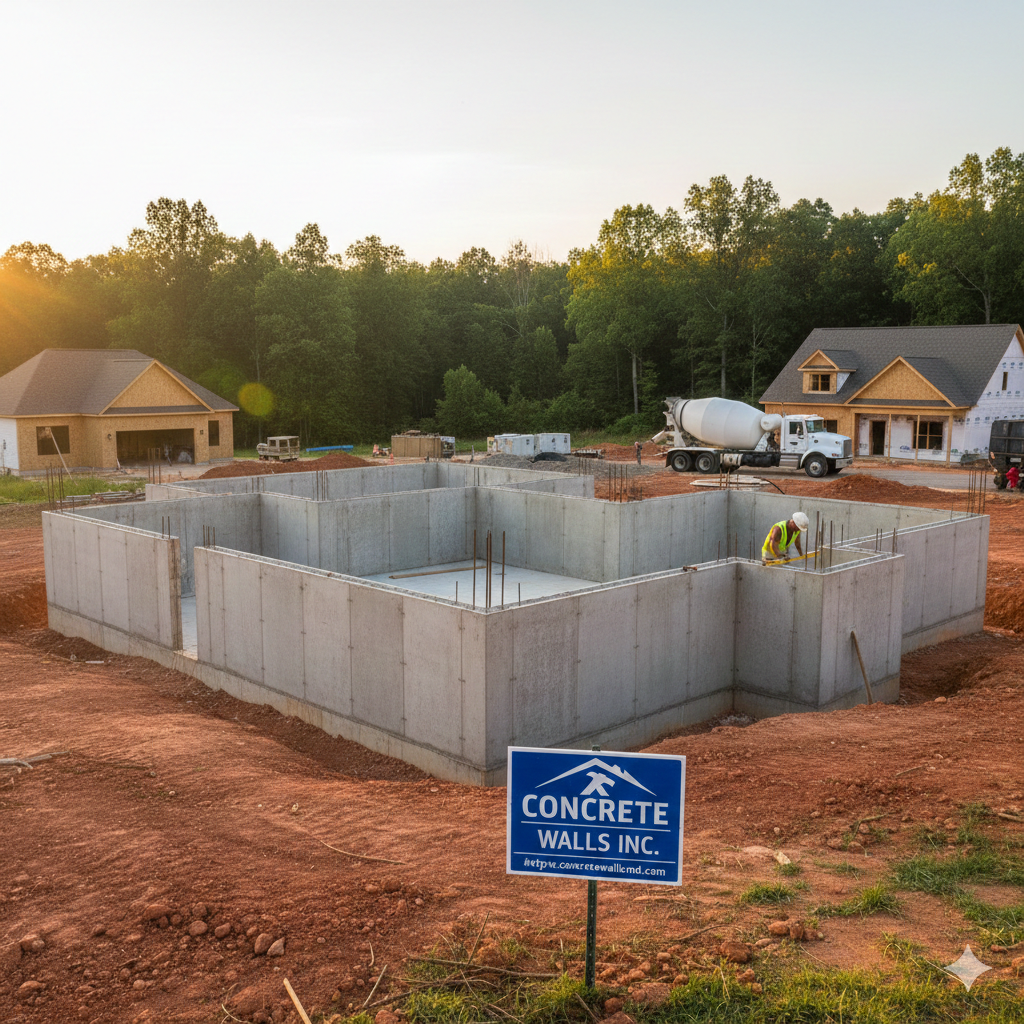
When you're building a new home or commercial structure in Maryland, the foundation is, quite literally, the groundwork for everything that follows. A strong, stable, and well-constructed concrete foundation is not just important; it's essential for the longevity, safety, and value of your property. For residents and builders across Southern Maryland, including Calvert County, St. Mary's County, Prince George's County, and Anne Arundel County, understanding the nuances of concrete foundations is key to a successful project.
The Indispensable Role of a Concrete Foundation
Imagine building a house on sand – it wouldn't last long, right? A concrete foundation serves as the stable base that supports the entire weight of a structure, distributing that weight evenly across the soil. It protects against soil movement, water intrusion, and provides a level surface for the construction above. In Maryland's diverse soil conditions and varying climate, a properly engineered and installed concrete foundation is critical for resisting environmental stresses and ensuring structural integrity for decades to come.
Types of Concrete Foundations
There are several types of concrete foundations, each suited for different soil conditions, structural requirements, and budget considerations. The most common types include:
- Slab-on-Grade Foundations: This is a monolithic pour where the concrete slab is cast directly on the ground, often with thickened edges that act as footings. It's popular for its cost-effectiveness and relatively quick installation. Ideal for stable soil conditions and warmer climates, but still widely used in Maryland with proper insulation and drainage.
- Crawl Space Foundations: These foundations elevate the structure off the ground, creating a shallow space (the crawl space) between the ground and the first floor. This space allows for easier access to plumbing, electrical, and HVAC systems. It typically involves concrete footings and perimeter walls, with a vapor barrier and sometimes a concrete slab within the crawl space itself.
- Basement Foundations: The most common choice for many Maryland homes, a basement foundation involves excavating deep enough to create full-height concrete walls that form a usable living or storage space below ground. Basements offer excellent protection against the elements, increase usable square footage, and provide superior insulation. They require robust waterproofing and drainage systems.
Choosing the Right Foundation in Southern Maryland
Selecting the appropriate foundation type depends on several factors specific to your project and location:
- Soil Conditions: Geotechnical reports are crucial. Clay soils, sandy soils, and areas with high water tables (common in some parts of Southern Maryland) will influence the best foundation choice.
- Site Grade and Drainage: The slope of your land and how water drains around the property will impact foundation design, especially for preventing moisture issues.
- Building Design and Weight: Heavier structures or multi-story buildings require more robust foundations.
- Budget and Timeline: While cost is a factor, compromising on foundation quality can lead to much larger expenses down the road.
- Local Building Codes: All projects must comply with specific codes and regulations in Calvert, St. Mary's, Prince George's, and Anne Arundel Counties.
The Importance of Professional Installation
Pouring a concrete foundation is not a DIY job. It requires precision, specialized equipment, and extensive knowledge of concrete properties, excavation, formwork, rebar placement, and curing processes. An improperly installed foundation can lead to:
- Cracking and settling
- Moisture intrusion and mold growth
- Structural instability
- Costly repairs down the line
Working with an experienced and reputable concrete contractor, like Concrete Walls Inc. based in Huntingtown, MD, ensures that your foundation is built to last, meeting all local codes and engineered specifications.
Frequently Asked Questions: Concrete Foundations in Maryland
Navigating the world of excavation and concrete can be overwhelming. To help you plan your next project in Southern Maryland, we’ve compiled the most common questions we hear at our Huntingtown office regarding concrete foundations.
Which foundation type is best for Southern Maryland soil?
In areas like Calvert and St. Mary’s County, we see a mix of sandy loam and heavy clay. Basement foundations are incredibly popular for the added square footage and stability, but crawl spaces are also common in lower-lying coastal areas to help manage moisture. The "best" type depends on your specific lot's topography and soil report.
How long does it take to pour and cure a foundation?
The physical pour usually takes one day, but the preparation (excavation, footings, and forms) can take a week or more depending on the size of the home. Once poured, concrete needs time to "cure." While you can often walk on it within 24–48 hours, it takes about 28 days to reach its full design strength.
Do I need a permit for a new concrete foundation in Maryland?
Yes. Whether you are in Prince George’s County or Anne Arundel County, a building permit is required for any structural foundation. As local experts, we ensure our work meets or exceeds the specific building codes for your county to ensure a smooth inspection process.
How do you prevent basement leaks in Maryland’s humid climate?
Proper drainage is key. We utilize high-quality waterproofing membranes, interior or exterior drain tiles (French drains), and professional-grade sump pump systems. Ensuring the ground slopes away from the foundation is also a critical step we manage during the final stages.
Why are poured concrete walls preferred over cinder blocks?
While both are used, poured concrete walls generally offer higher compressive and flexural strength than block walls. They are also more resistant to water seepage because they lack the many mortar joints found in masonry block construction.
Conclusion
A solid concrete foundation is the bedrock of any successful construction project in Maryland. Understanding the different types, the factors influencing their selection, and the critical importance of professional installation will empower you to make informed decisions. For homes and businesses in Calvert County, St. Mary's County, Prince George's County, and Anne Arundel County, Concrete Walls Inc. stands ready to provide expert advice and execution for all your concrete foundation needs. Don't compromise on the most vital part of your build – invest in a quality foundation for a secure future.
Contact Concrete Walls Inc. for any of your concrete and foundation needs:
https://www.concretewallsmd.com/contact
Related Keywords and Hashtags:
- concrete foundation Maryland
- Southern Maryland concrete
- Calvert County foundations
- St Mary's County concrete
- Prince George's County foundation
- Anne Arundel County concrete walls
- foundation contractor MD
- concrete construction Maryland
- basement foundation Maryland
- slab on grade MD
- crawl space foundation
- concrete walls Huntingtown MD
- new home foundation
- #ConcreteFoundationMD
- #MarylandConstruction
- #ConcreteWallsInc
- #SoMDConcrete
- #FoundationExperts